Why Tactics Matter
At its core, a battle is a contest between two forces trying to impose their will on each other. Raw numbers matter, but how those numbers are used — tactics — often matters more. History is full of examples where smaller forces defeated larger ones through superior tactics. Understanding basic tactical concepts not only deepens your appreciation of military history but also helps you identify specific battles in BattleGuess, since many famous battles are remembered precisely for the innovative tactics used.
Flanking and Envelopment
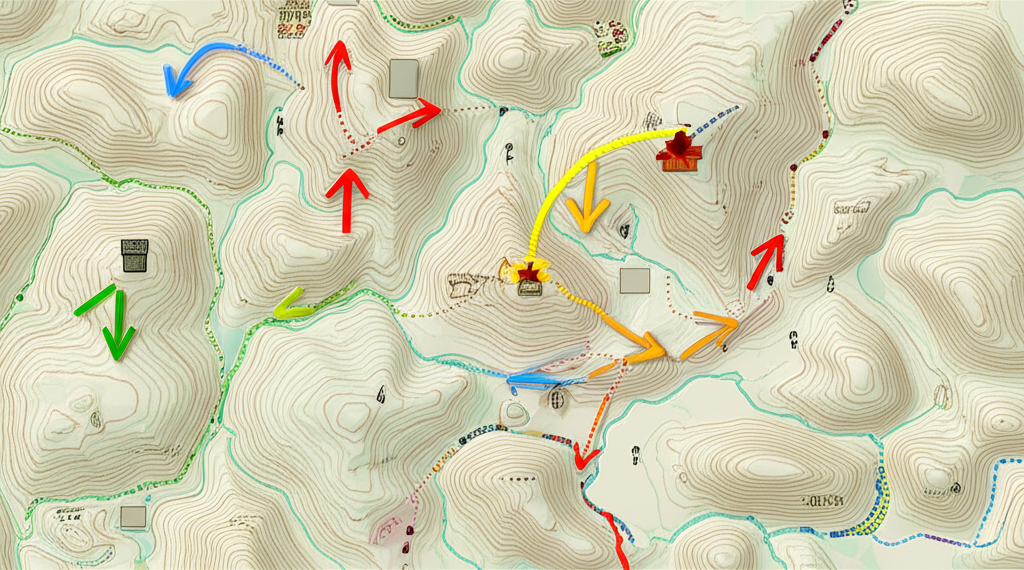
A flanking attack targets the side of an enemy formation, where it is weakest. A double envelopment attacks both flanks simultaneously, surrounding the enemy. The most famous example is Hannibal’s victory at Cannae in 216 BCE, where he deliberately weakened his center to draw the Romans in, then closed his wings around them like a trap. This tactic has been copied countless times throughout history and remains a fundamental maneuver in modern military doctrine.
Flanking works because formations are almost always strongest facing forward — shields, bayonets, main guns, and trained attention all point the same way. Hit the side, and you force enemy soldiers to rotate individually while under attack, which is the moment when cohesion breaks. The principle scales from a hoplite phalanx to an armoured division: Schlieffen planned a massive flanking wheel through Belgium in 1914, and Guderian's Panzer breakthrough at Sedan in 1940 was essentially a Cannae at the operational level. The weapons changed; the geometry did not.
The Hammer and Anvil
This tactic uses a strong defensive force (the anvil) to pin the enemy in place while a mobile force (the hammer) strikes from a different direction. Alexander the Great was the master of this approach: his phalanx held the enemy front while his Companion cavalry struck the decisive blow from the flank or rear. The same principle applies to modern combined-arms warfare, where infantry pins the enemy while armor or air power delivers the knockout punch.
Defense in Depth and Terrain
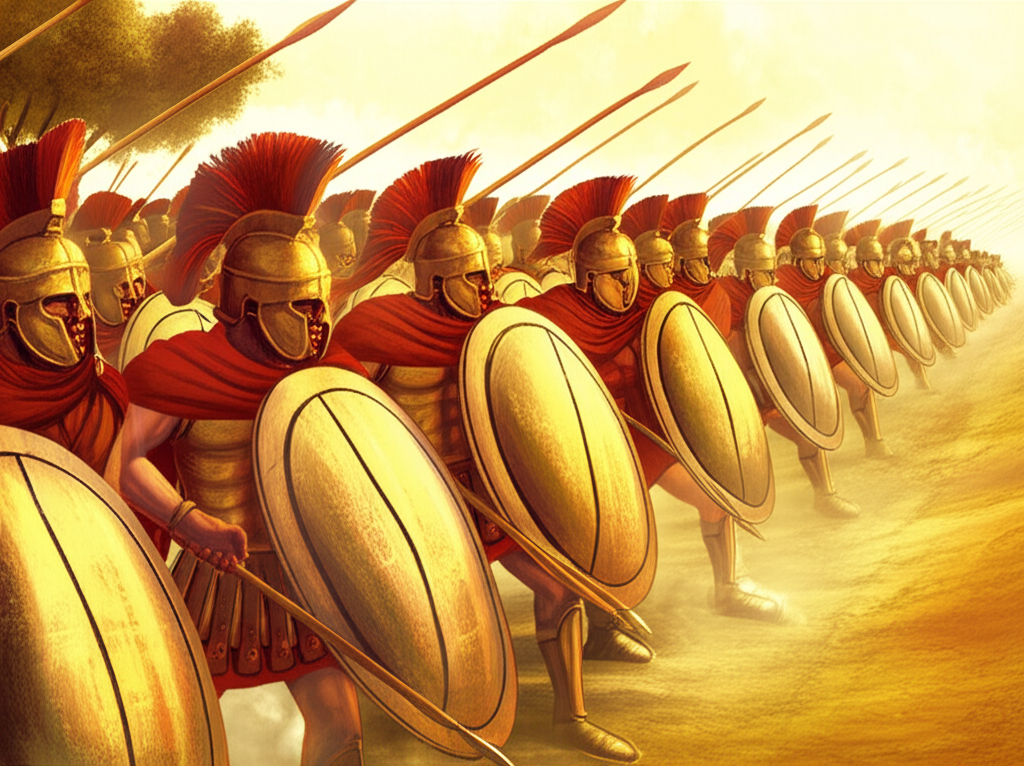
Not all successful tactics involve attacking. Defense in depth involves creating multiple defensive lines that the enemy must fight through, wearing them down with each layer. Terrain can multiply the power of a smaller force: mountain passes, river crossings, and narrow straits force larger armies to fight on a narrow front where their numerical advantage is neutralized. Thermopylae is the classic example, but terrain-based defense has been used from ancient times through modern conflicts.
Deception and Surprise
Deception has been a cornerstone of military tactics since ancient times. Sun Tzu devoted entire chapters of The Art of War to the importance of deception. Successful surprise attacks have changed the course of wars throughout history.
- •The Trojan Horse — perhaps the most famous military deception in myth or history
- •Washington at Trenton — a Christmas night surprise attack that saved the American Revolution
- •D-Day’s Operation Bodyguard — an elaborate deception that convinced Germany the invasion would target Calais
- •Oda Nobunaga at Okehazama — a surprise attack during a thunderstorm against forces ten times his size
- •The Six-Day War (1967) — Israel’s preemptive air strike destroyed most of the Egyptian air force on the ground
Common Tactical Mistakes
Understanding why armies lose is just as instructive as understanding why they win. Many of history’s greatest defeats share common tactical errors.
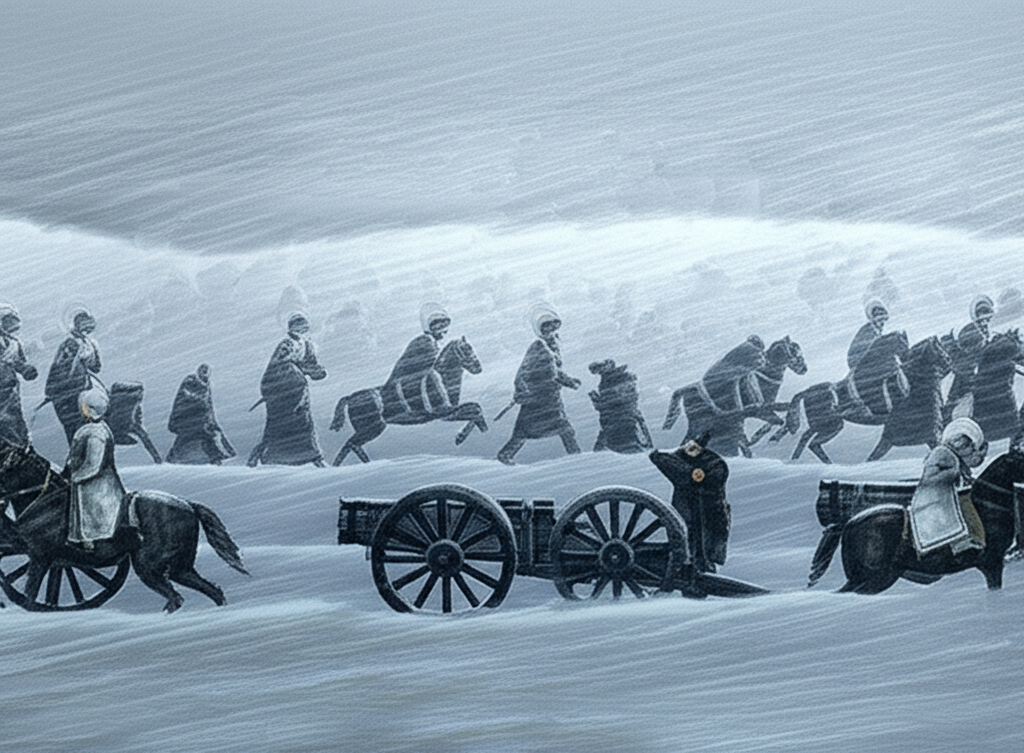
- •Overextension — advancing too far from supply lines, as Napoleon did in Russia
- •Underestimating the enemy — assuming victory is assured, as the Persians did at Marathon
- •Fighting on unfavorable terrain — as the Crusaders did at Hattin, where they were lured into a waterless desert
- •Ignoring intelligence — dismissing warnings about enemy intentions, as at Pearl Harbor
- •Attacking strong positions frontally — as Burnside did at Fredericksburg, leading to catastrophic casualties
Spotting Tactics in BattleGuess
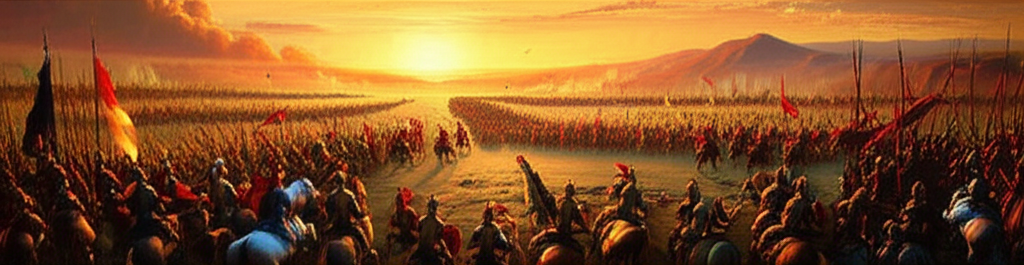
Understanding tactics helps you identify battles in BattleGuess because many famous engagements are depicted at the moment their defining tactic was executed. An image showing forces closing around a trapped army suggests Cannae or Stalingrad. A cavalry charge hitting an exposed flank suggests Gaugamela or Austerlitz. A defensive position in a narrow pass suggests Thermopylae or Roncesvalles. By recognizing the tactical situation in an image, you can narrow down the possibilities before examining other visual clues at BattleGuess.
Tactics That Shaped Modern Warfare
Classical tactics evolved into modern doctrines once industrialised firepower changed the rules. Several 20th-century approaches now sit alongside the older concepts in any serious tactical toolkit.
- •Infiltration tactics — developed by German stormtroopers in 1918 and Soviet deep battle in the 1930s, these bypass strongpoints to strike command and logistics
- •Combined arms — the integration of infantry, armour, artillery, and air power, so that each arm covers the others' weaknesses
- •Maneuver warfare — defeating an enemy by disrupting their ability to respond rather than destroying them piece by piece, formalised in U.S. doctrine in the 1980s
- •Counter-insurgency — the “ink-spot” approach of securing populations rather than holding terrain, refined from Malaya through Iraq
- •Network-centric and multi-domain operations — using information superiority to coordinate land, sea, air, space, and cyber effects simultaneously
How to Read a Battle Like a Historian
The same battle can look completely different depending on how you read it. Professional historians (and sharp players) usually work through the same checklist: what did each side want to achieve, what did each side know about the other, what was the terrain and weather, what was the force composition, and what were the key decision points where the outcome could have gone differently. Try it on a battle you already know — Gettysburg, Waterloo, Midway — and you will often find the textbook story is much thinner than the full picture. That habit also pays off in BattleGuess: the same tactical clues that let historians reconstruct ancient engagements let you narrow down which battle you are looking at.
Keep Exploring BattleGuess
Tactics are most memorable when you see them in action. Pair these companions with rounds at BattleGuess to lock the concepts in.
- •8 Ways to Improve Your BattleGuess Score — turn tactical awareness into points
- •A Beginner’s Guide to Military History — the era and geography context behind every tactic
- •The Greatest Military Commanders of All Time — the commanders who pioneered these maneuvers
- •Ancient Rome vs Ancient Greece: A Military Comparison — the system-level case study of flexibility vs rigidity
- •Spot tactical situations live in the Battle encyclopedia or pick a themed game mode challenge.