Hidden Figures of the Battlefield
Military history has traditionally been written as a story of men, but women have played critical roles in warfare throughout the ages. From queens who personally led armies into battle to strategists who planned campaigns from behind the lines, women’s contributions to military history are far more extensive than most textbooks acknowledge. Their stories challenge conventional narratives and reveal the full complexity of how wars have been fought and won.
Ancient Warriors and Queens
Ancient history records numerous women who took the battlefield. Hatshepsut of Egypt launched military expeditions during her reign. The Celtic queen Boudicca led a massive revolt against Roman Britain in 60 CE, burning Londinium to the ground. Cleopatra VII commanded the Egyptian fleet at the Battle of Actium alongside Mark Antony. Zenobia of Palmyra conquered Egypt and much of the Roman East before being defeated by Emperor Aurelian. These women wielded military power at the highest levels of their societies.
- •Hatshepsut led military campaigns into Nubia and the Levant during her reign as pharaoh
- •Boudicca’s revolt killed an estimated 70,000-80,000 Roman citizens and nearly drove Rome from Britain
- •Tomyris, queen of the Massagetae, defeated and killed Cyrus the Great of Persia in 530 BCE
- •Artemisia I of Halicarnassus commanded warships at the Battle of Salamis and advised Xerxes
Joan of Arc and Medieval Warrior Women
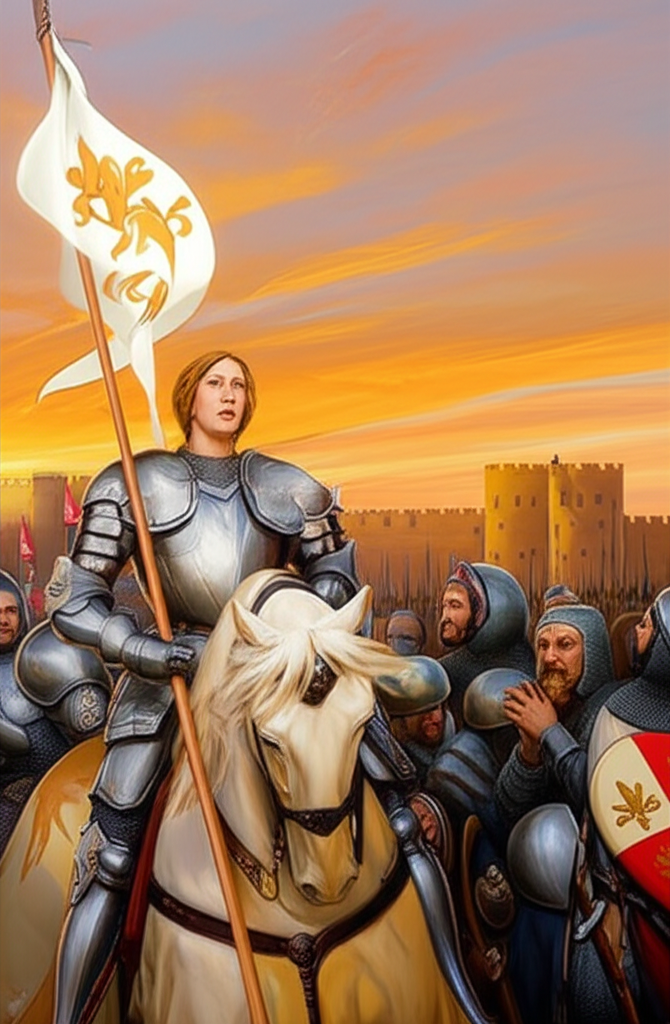
Joan of Arc remains the most famous female military figure in Western history. At just seventeen, she rallied the French army at the Siege of Orléans in 1429, turning the tide of the Hundred Years’ War. Her leadership was both strategic and symbolic, inspiring troops who had been demoralized by years of defeat. Beyond Joan, medieval history includes numerous women who defended castles under siege, led troops in their husbands’ absence, and played active roles in the military affairs of their kingdoms.
Modern Military Women
The role of women in military operations expanded dramatically in the modern era. During World War II, Soviet women served as snipers, pilots, and combat soldiers, with figures like Lyudmila Pavlichenko (309 confirmed kills) becoming legendary. Women served in resistance movements across occupied Europe, provided essential support as nurses and code-breakers, and flew combat missions as part of the Soviet Night Witches bomber regiment. Their service helped pave the way for women’s integration into modern armed forces.
The post-1945 integration story is uneven and worth understanding in detail. Israel conscripted women from 1948 but initially restricted them to non-combat roles; those restrictions were steadily loosened over five decades. The United States permitted women in all combat roles only in 2015. The Soviet Union, which had fielded the largest force of women combatants in history, quietly pushed most of them back into civilian life after 1945 — the wartime demand vanished faster than the stigma did. Every modern military that integrates women has had to work through the same set of practical questions: training standards, unit cohesion, deployment policy, and treatment of prisoners. The answers keep evolving.
- •The Night Witches flew over 30,000 bombing sorties using obsolete biplanes made of plywood and canvas
- •The Special Operations Executive (SOE) sent women behind enemy lines in occupied France
- •Women served as code-breakers at Bletchley Park, contributing to the breaking of the Enigma cipher
- •Today, women serve in combat roles in militaries around the world, including as fighter pilots and special forces operators
Recognizing Their Battles
Several battles in BattleGuess are directly connected to women’s military leadership. The Siege of Orléans, the Battle of Actium, and numerous other engagements feature women as key decision-makers. When you see the distinctive banner of a French army rallying at a besieged city, think Joan of Arc. When you see an Egyptian fleet in the Mediterranean, consider Cleopatra. These battles remind us that military history belongs to everyone who fought to shape it. Meet more of those stories at BattleGuess.
Beyond the Western Canon
The familiar list of warrior women tends to centre on Europe and the Mediterranean. Looking globally produces a far larger catalogue of figures whose influence shaped national military traditions.
- •Rani Lakshmibai of Jhansi — led cavalry charges during the 1857 Indian Rebellion and died in combat at Gwalior
- •Empress Jingu — legendary Japanese ruler credited with leading an invasion of Korea in the 3rd century CE
- •Lozen — Apache warrior and prophet who fought alongside Victorio and Geronimo, renowned for her skill with horses and weapons
- •Nzinga Mbande — 17th-century queen of Ndongo and Matamba who waged a 30-year war against Portuguese colonists in what is now Angola
- •Ching Shih — early 19th-century Chinese pirate leader who commanded a fleet of 1,800 ships and 70,000 men, larger than most national navies of the period
- •The Dahomey Agojie — West African all-female elite regiment that fought through the 19th century and defeated multiple French expeditions before colonial conquest
Women Behind the Lines
Direct combat is only part of the story. Women's contributions to intelligence, code-breaking, logistics, medicine, and resistance have often been the margin of victory. Roughly 75% of Bletchley Park's wartime staff were women, many operating the Bombe machines that broke Enigma traffic daily. Virginia Hall, an American SOE agent in occupied France, coordinated resistance networks while the Gestapo hunted her as “the most dangerous Allied spy.” Soviet partisans relied on women as couriers, bombers, and saboteurs behind German lines. In every war where detailed records survive, women's contributions have proven far larger than the stripped-down battle narratives suggest.
Keep Exploring BattleGuess
Women’s military history cuts across every era on the site. These companions drop you into the fuller context.
- •The Greatest Military Commanders of All Time — compare with the male-dominated canon to see what was missing
- •5 Turning Points of World War II — the engagements where Soviet women flew, shot, and broke codes
- •10 Most Decisive Battles in History — where Salamis, Actium, and Orleans fit in the bigger story
- •The Crusades Explained: Key Battles and Lasting Legacy — Eleanor of Aquitaine, Queen Melisende, and the medieval women at the heart of the wars
- •Find battles led or defined by women in the Battle encyclopedia or test yourself in a game mode round.