The Birth of Organized Warfare
The earliest recorded battles in Mesopotamia and Egypt established principles of military organization that persist to this day. Sumerian city-states developed the phalanx formation around 2500 BCE, arranging soldiers in tight ranks with overlapping shields — a concept the Greeks would later perfect. Egyptian pharaohs pioneered the use of chariots as mobile strike platforms, creating the first combined-arms tactics by coordinating infantry with fast-moving vehicles. These innovations were not just military developments; they required centralized government, taxation, and logistics systems that became the building blocks of civilization itself.
Greek Tactical Innovation
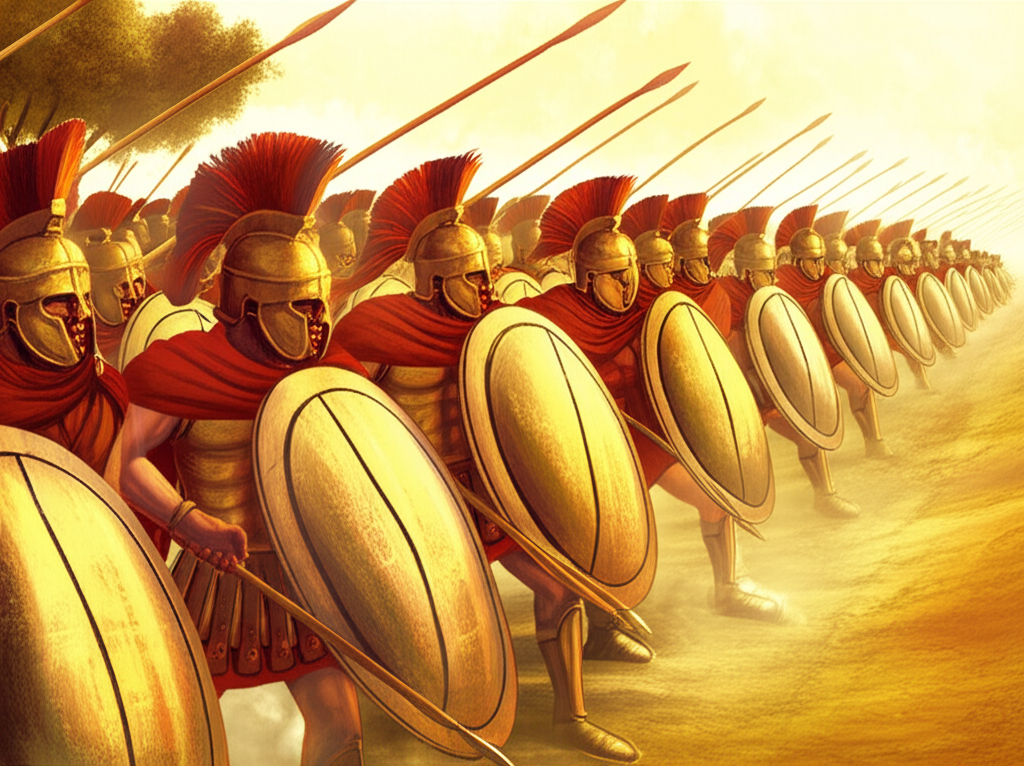
Ancient Greece transformed warfare from loose skirmishes into a disciplined science. The Greek hoplite phalanx, perfected by Sparta and adapted by other city-states, demonstrated that training and formation discipline could overcome numerical superiority. Philip II of Macedon extended the phalanx concept with the sarissa, an 18-foot pike that gave his soldiers reach advantages. His son Alexander the Great combined the Macedonian phalanx with cavalry shock tactics, creating a combined-arms approach that conquered the largest empire the world had yet seen. Modern military academies still study Alexander’s campaigns as examples of operational-level warfare.
- •The hoplite phalanx relied on each soldier’s shield protecting the man to his left
- •Sparta’s system of military education (the agoge) produced the most feared infantry in Greece
- •Alexander’s Companion cavalry served as the "hammer" to the phalanx’s "anvil"
- •Greek military innovations spread across the Mediterranean through colonization and conflict
Roman Engineering and Logistics
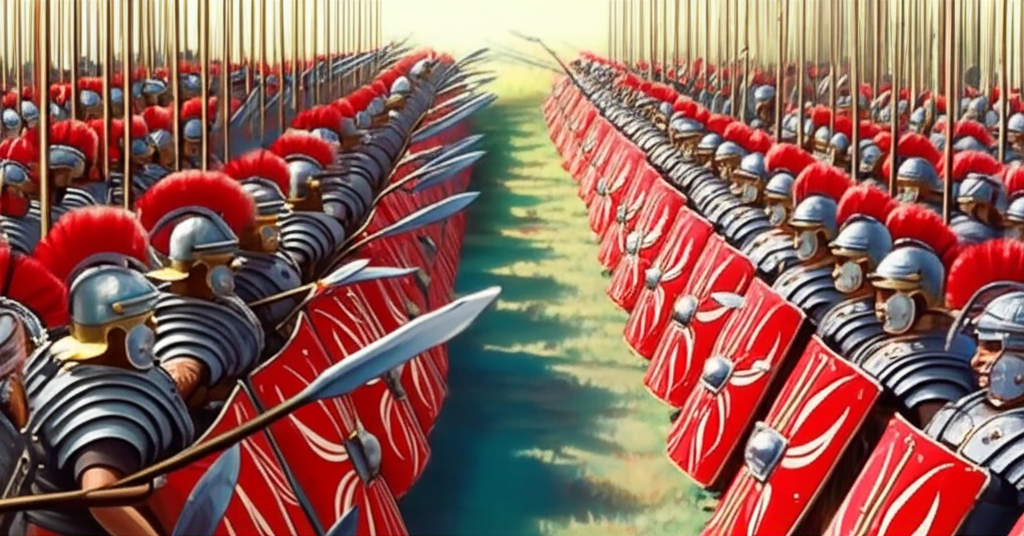
Rome’s military success rested not just on battlefield prowess but on engineering and logistics. The Roman legion was a self-contained fighting unit that built fortified camps every night on the march, constructed roads that connected an empire spanning three continents, and employed siege engineers capable of taking any fortification. The Roman road network, originally built for military deployment, became the transportation backbone of Europe and many modern European highways still follow Roman routes. Roman military law, rank structures, and organizational principles directly influenced the development of Western military tradition.
The legacy of Roman military engineering runs deeper than surviving roads and aqueducts. The grid layout of cities from London to Cologne began as the rectangular plan of a legionary camp, and many European universities still use Latin military vocabulary — castrum, cohors, legatus — in their administrative life. Roman manuals on fortification, surveying, and water management were copied and studied throughout the medieval period and rediscovered by Renaissance architects who designed the star forts of the sixteenth century. When modern engineers talk about standardised units, modular construction, and disciplined logistics, they are often echoing solutions first worked out by centurions and their engineers on the frontiers of the empire.
Technology Transfer Through Conflict
Warfare accelerated the spread of technology across the ancient world at a rate that peacetime trade alone could not match. The Hittites’ iron-working techniques spread through conflict and conquest, ushering in the Iron Age across the Near East. Chinese innovations like the crossbow and gunpowder eventually traveled westward along trade routes opened or secured by military campaigns. The stirrup, likely originating in Central Asian steppe warfare, revolutionized cavalry combat when it reached Europe and fundamentally changed medieval military and social structures by enabling the mounted knight.
- •Iron weapons replaced bronze after the Bronze Age collapse around 1200 BCE
- •The crossbow was used in China centuries before it appeared in European warfare
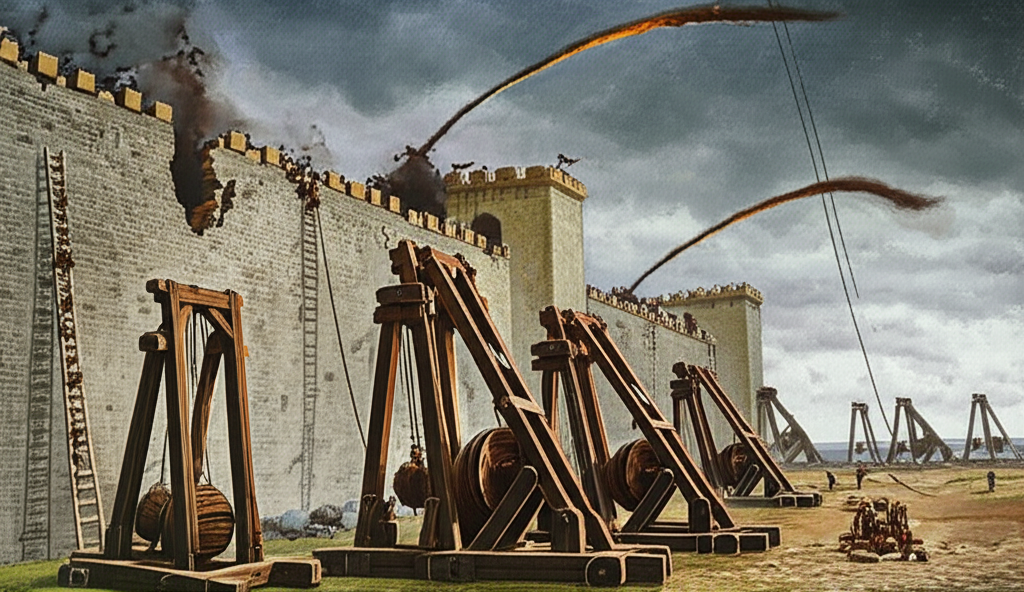
- •Siege techniques spread from Assyria to Greece to Rome, each culture refining what came before
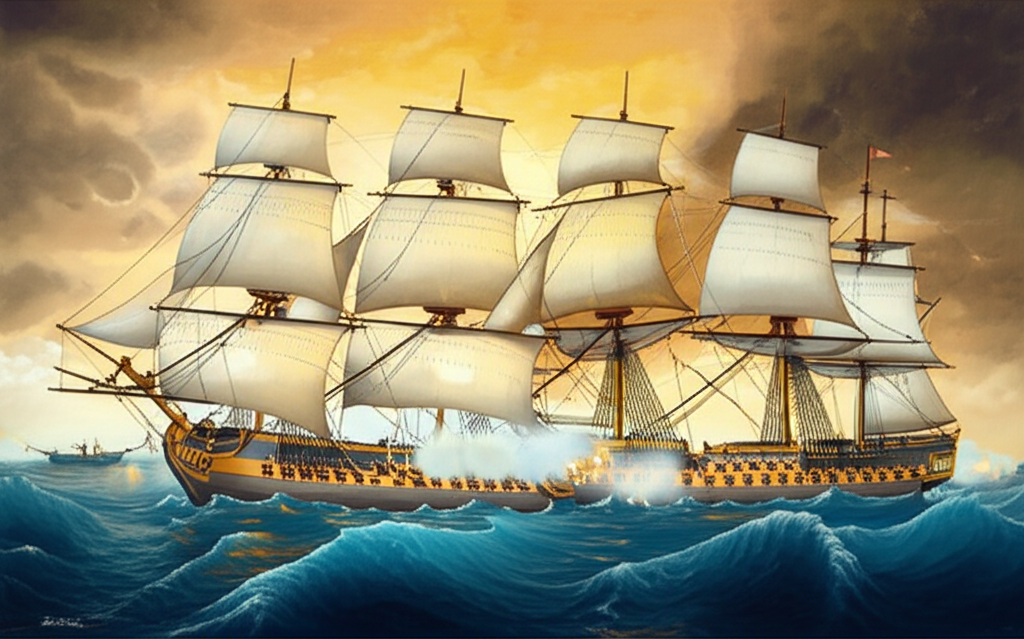
- •Naval technology advanced rapidly as Mediterranean powers competed for sea control
Lasting Political Legacies
The political boundaries drawn by ancient conquests are still visible on modern maps. Alexander’s empire spread Greek language and culture across the Middle East, creating the Hellenistic world whose influence persisted through Roman and Byzantine rule into the present day. Roman conquests determined which parts of Europe speak Romance languages and which retained Germanic or Celtic tongues. The concept of citizenship, republican government, and codified law — all of which were shaped by Rome’s military expansion — became the intellectual foundation of modern Western democracies.
Ancient Logistics and the Birth of the Supply Train
Long before strategy manuals existed, ancient commanders discovered that battles were usually won or lost by whoever could feed and water their army the longest. A Roman legion on campaign needed enormous daily quantities of grain, fodder for pack animals, and fresh water, and entire bureaucracies evolved to keep that flow moving. The Persian Royal Road, Egyptian granary networks, and Carthaginian naval convoys were all logistical answers to the same fundamental problem — how do you keep thousands of armed men alive in hostile territory?
These systems left cultural fingerprints that far outlasted the armies they served. Standardised weights and measures, state-run bakeries, written requisition orders, and centralised tax collection all matured under military pressure. Modern supply chains — from just-in-time manufacturing to military expeditionary logistics — still rest on principles first worked out when a quartermaster had to decide how many wagons of wheat a legion needed to reach the Rhine.
- •A legion on campaign required roughly a tonne of grain per day for soldiers alone
- •Persian royal couriers inspired later postal and messenger systems
- •Greek city-states pioneered written contracts for mercenary supply
- •Carthaginian naval logistics enabled Hannibal’s Iberian operations for years at a time
Archaeology and What the Battlefields Still Reveal
Much of our evolving picture of ancient warfare comes not from texts but from the ground itself. Battlefield archaeology at sites such as the Teutoburg Forest has overturned the old written narrative, locating the actual line of ambush through metal-detector surveys of Roman coins, hobnails, and weapon fragments. Similar work at Greek and Punic sites has shown that ancient combat was often messier, more compressed, and more mobile than neat diagrams in textbooks suggest.
Scientific techniques have added new layers. Isotope analysis of skeletal remains tells us where soldiers grew up; chemical residues on weapons reveal what materials they were used against; aerial LiDAR uncovers earthworks invisible from the ground. The Roman siege works around Alesia, for example, have been mapped in extraordinary detail using modern survey technology. For beginners, exploring these findings alongside the classical sources — and comparing them with engagements in the Battle encyclopedia — is one of the most rewarding ways into ancient military history.
Further Reading
If you want to explore ancient warfare further, these resources are excellent starting points.
- •The Art of War by Sun Tzu — the foundational text on military strategy, still studied today
- •Warfare in the Ancient World — World History Encyclopedia’s comprehensive overview
- •Ancient History Encyclopedia — free articles on ancient civilizations and their military systems
Keep Exploring BattleGuess
Dig deeper into the ancient world and related eras with these guides, then put your knowledge to the test at BattleGuess.
- •Ancient Rome vs Ancient Greece: A Military Comparison — phalanx against legion, head to head
- •The History of Cavalry: From Chariots to Tanks — mounted warfare across 4,000 years
- •The Evolution of Siege Warfare — how armies cracked open fortified cities from Assyria onward
- •Battles Every Student Should Know — the core ancient and medieval engagements to memorize
- •Browse every ancient engagement in the Battle encyclopedia or jump straight into today’s game.