The Age of Chariots
The war chariot was the first major innovation in mobile warfare, appearing around 2000 BCE in the ancient Near East. Egyptian pharaohs, Hittite kings, and Assyrian emperors all relied on chariot forces as their primary strike arm. The Battle of Kadesh in 1274 BCE between Egyptian and Hittite chariot armies was one of the largest chariot engagements in history. Chariots provided speed, elevation for archers, and psychological impact against infantry, but their effectiveness was limited by terrain and they were gradually replaced by mounted cavalry.
The Rise of Mounted Cavalry
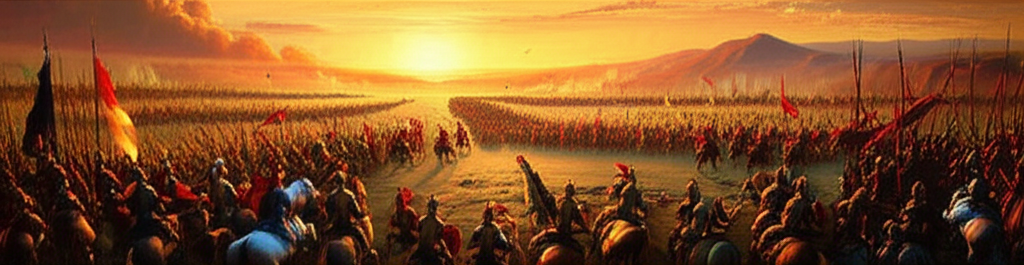
Mounted cavalry transformed warfare beginning around 900 BCE with Central Asian steppe nomads who practically lived on horseback. The invention of the stirrup, arriving in Europe around the 6th century CE, allowed riders to fight with lance and sword without losing balance, giving rise to the heavily armored mounted knight who dominated medieval European battlefields. Alexander the Great’s Companion cavalry was decisive at every battle from the Granicus to Gaugamela, demonstrating that well-led cavalry could shatter enemy formations.
- •Scythian horse archers could fire accurately while riding at full gallop
- •The stirrup is considered one of the most important military inventions in history
- •Parthian and Persian cataphracts were among the earliest heavily armored cavalry
- •Mongol cavalry combined mobility, archery, and sophisticated tactics to conquer half of Eurasia
The Medieval Knight
The armored knight was the apex predator of medieval warfare for nearly five centuries. A single charge of heavy cavalry could break infantry formations, scatter light cavalry, and decide a battle in minutes. Battles like Hastings, Bouvines, and the Crusade engagements showcase the devastating impact of mounted knights. However, the knight’s dominance was not absolute — disciplined infantry with pikes or longbows could stop cavalry charges, as demonstrated at Bannockburn, Crécy, and Agincourt.
What made the knight so expensive, and so politically powerful, was the full system behind him. A single fully equipped knight required a trained warhorse (often several), mail or plate armour, squires, grooms, and land-rents to support all of it. That is why the feudal system existed in its European form: it was essentially a long-term financing arrangement for maintaining heavy cavalry. When that funding model broke in the late Middle Ages — partly from the rise of professional infantry, partly from the economic shock of the Black Death — the knight's battlefield dominance went with it.
Cavalry in the Gunpowder Age
Gunpowder did not immediately end cavalry’s role in warfare. Napoleon used massed cavalry charges with devastating effect throughout his campaigns, and cavalry remained important through the American Civil War and even into World War I. Hussars, dragoons, and lancers remained essential battlefield units well into the 19th century.
- •The Charge of the Light Brigade at Balaclava (1854) became a symbol of both courage and the futility of cavalry against modern weapons
- •Cavalry played a key role in reconnaissance and screening throughout the Napoleonic Wars
- •The last major cavalry charge in history was at the Battle of Beersheba in 1917
- •Polish cavalry did NOT charge German tanks in 1939 — this is a popular myth
From Horse to Tank
The tank, first deployed at the Battle of the Somme in 1916, was essentially a mechanized version of the armored knight — providing mobility, protection, and firepower. By World War II, armored divisions had replaced cavalry as the primary mobile striking force. The blitzkrieg tactics pioneered by Germany combined tanks, motorized infantry, and close air support in a modern form of combined-arms warfare that echoed the hammer-and-anvil tactics of ancient cavalry commanders.
Spotting Cavalry in BattleGuess
Cavalry battles are some of the most dynamic and visually exciting images in BattleGuess. Look for the type of mount and equipment to determine the era: chariots suggest ancient Egypt or Mesopotamia, unarmored horsemen suggest steppe or early cavalry, fully armored knights indicate the medieval period, and hussars or dragoons point to the Napoleonic era. The transition from horse to tank is one of the clearest visual markers in the game for identifying the time period of a battle at BattleGuess.
The Horse Itself Was a Technology
It is easy to forget that the horse was the most important piece of military technology for nearly four thousand years. Small changes in breeding, equipment, and care produced massive battlefield consequences.
- •Selective breeding produced the huge destriers that could carry armoured knights, and the tough steppe ponies that sustained Mongol campaigns across Eurasia
- •The horseshoe (widespread in Europe by the 9th century) preserved hooves on paved roads and rocky terrain, vastly extending operational range
- •The padded horse collar replaced the throat-strangling yoke and let horses pull heavier loads, reshaping military logistics
- •Horse archery required years of training from childhood — which is why steppe peoples produced cavalry that settled societies could rarely match
- •A Napoleonic army needed roughly one horse for every three soldiers; forage logistics often dictated whether a campaign was possible at all
What Replaced Cavalry, and What Did Not
Tanks inherited the cavalry role of operational shock, but not every cavalry function transferred. Helicopters took over reconnaissance and rapid insertion — essentially the dragoon role. Attack helicopters and armed drones now provide what was once the cavalry's mobile firepower. What has not really been replaced is the political symbolism: horses remain the image nations reach for when they want to evoke military tradition, which is why mounted units lead most state ceremonies even in heavily mechanised armies. The horse left the battlefield; it never quite left the parade ground.
Keep Exploring BattleGuess
Cavalry winds through every era. Continue with these related guides, then put the era signatures you have just learned to the test.
- •How Gunpowder Changed Warfare Forever — the technology that slowly retired the horse
- •Samurai Battles: The Warrior Conflicts of Feudal Japan — mounted samurai before and after Nagashino
- •Battlefield Tactics Explained for Beginners — the hammer-and-anvil built around cavalry
- •How Ancient Warfare Shaped the Modern World — from Egyptian chariots to Alexander’s Companions
- •Identify horse, tank, and chariot battles in the Battle encyclopedia or start a fresh game mode round.