A Continent in Chains
By the early 19th century, Spanish and Portuguese colonial rule in the Americas had lasted over three hundred years. Inspired by the American and French Revolutions, and taking advantage of the chaos caused by Napoleon’s invasion of Spain, independence movements erupted across Latin America. From Mexico to Argentina, colonial populations rose against their European rulers in a series of wars that would create over a dozen new nations.
Simon Bolivar: The Liberator
Simon Bolivar is the towering figure of South American independence. His campaigns across Venezuela, Colombia, Ecuador, Peru, and Bolivia combined military brilliance with political vision. The Battle of Boyaca in 1819 secured Colombian independence after a dramatic march across the Andes that caught the Spanish completely off guard. The Battle of Carabobo in 1821 liberated Venezuela, and the Battle of Pichincha in 1822, fought on the slopes of an active volcano, freed Ecuador.
Jose de San Martin and the Southern Campaign
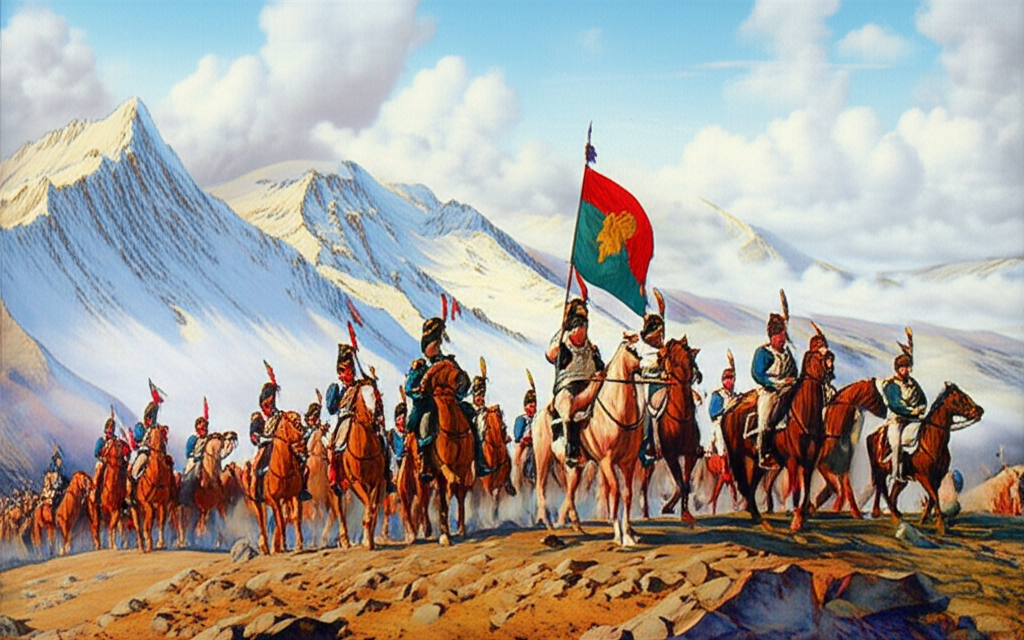
While Bolivar liberated the north, Jose de San Martin led the independence campaigns in the south. His crossing of the Andes from Argentina into Chile in 1817 is compared to Hannibal’s crossing of the Alps for its audacity and difficulty. The Battle of Chacabuco secured Chilean independence, and the Battle of Maipu confirmed it. San Martin then advanced into Peru, where his forces and Bolivar’s would eventually converge to deliver the final blow to Spanish colonial power at the Battle of Ayacucho in 1824.
The Andes crossing deserves its own attention as a feat of military logistics. San Martin spent more than two years preparing: establishing foundries, weaving uniforms, breeding mules, and coordinating diversionary feints to fool the Spanish about his route. Five thousand soldiers crossed passes above 3,500 metres in midsummer snow, losing roughly a third of their pack animals. The fact that an army arrived in Chile at all — still organised, still equipped, still willing to fight within 48 hours at Chacabuco — is one of the great logistical achievements in military history.
Key Battles of the Liberation
The wars of independence produced dozens of significant engagements across the continent. These are the most important battles that students of Latin American history should know.
- •Boyaca (1819) — secured Colombian independence after Bolivar’s Andes crossing
- •Carabobo (1821) — the decisive battle for Venezuelan independence
- •Chacabuco (1817) and Maipu (1818) — San Martin’s victories that freed Chile
- •Ayacucho (1824) — the final major battle of the South American independence wars
- •Puebla (1862) — Mexican forces defeated a French army, now celebrated as Cinco de Mayo
Mexico and Central America
Mexico’s path to independence was equally dramatic. The Battle of Puebla in 1862, celebrated as Cinco de Mayo, saw Mexican forces defeat a French army that had been considered one of the finest in the world. Earlier, the wars of independence had involved complex alliances between indigenous peoples, mestizo populations, and Creole elites, each with different visions for the new nation.
Explore Latin American Battles
Latin American battles are among the newest additions to BattleGuess, covering conflicts from the Inca Empire through the Chaco War. These battles feature distinctive visual elements: Andean mountain landscapes, tropical forests, cavalry-heavy warfare on the pampas, and the unique mixture of European military traditions with indigenous fighting styles. Explore the Latin American Wars era in BattleGuess to test your knowledge of these under-studied but fascinating conflicts.
Post-Independence Wars That Redrew the Map
Independence was only the start. The 19th century saw a second wave of wars that determined the final borders of Latin American nations — and they are often more surprising than the wars of liberation themselves.
- •The War of the Triple Alliance (1864-1870) — Paraguay fought Brazil, Argentina, and Uruguay simultaneously, losing perhaps 60% of its population in one of history's most devastating wars
- •The War of the Pacific (1879-1884) — Chile defeated Peru and Bolivia, leaving Bolivia landlocked to this day and reshaping South America's nitrate-driven economies
- •The Mexican-American War (1846-1848) — transferred roughly half of Mexico's territory to the United States, including California and the American Southwest
- •The Chaco War (1932-1935) — Bolivia and Paraguay fought over the Gran Chaco in one of the deadliest conflicts of interwar Latin America
- •The Cisplatine War (1825-1828) — Argentina and Brazil fought over what became Uruguay, creating a buffer state by British mediation
Why the Liberators’ Vision Fell Short
Bolivar died in 1830 writing bitterly that he had “ploughed the sea.” Independence freed Latin America from direct Spanish rule but did not deliver the unified continental republic he envisioned. Social hierarchies largely survived — Creole elites simply replaced Spanish officials at the top. Caudillismo (strongman rule), regional civil wars, and foreign economic dependence shaped the first century of republican life. Understanding the gap between Bolivar's Letter from Jamaica and the fragmented continent that actually emerged is essential for making sense of modern Latin American politics.
Keep Exploring BattleGuess
Latin America’s wars of independence sit in a much larger global story. Broaden the picture with these guides.
- •The American Revolution: Key Battles That Won Independence — the northern independence story that inspired Bolivar
- •The Greatest Military Commanders of All Time — where Bolivar and San Martin rank among history’s best
- •Battlefield Tactics Explained for Beginners — the maneuvers behind Boyaca, Ayacucho, and Puebla
- •How Weather Decided Famous Battles — the Andes crossings and their extreme conditions
- •Browse every Latin American engagement in the Battle encyclopedia or try an independence-era game mode round.