What Were the Crusades
The Crusades were a series of religious wars fought between the 11th and 13th centuries, primarily between Christian European forces and Muslim powers in the Eastern Mediterranean. Launched by Pope Urban II in 1095, the First Crusade aimed to recapture Jerusalem and the Holy Land. Over the next two centuries, multiple Crusades were launched with varying degrees of success, involving complex alliances, brutal sieges, and dramatic battlefield encounters that shaped relations between Europe and the Middle East for centuries to come.
The First Crusade and the Siege of Jerusalem
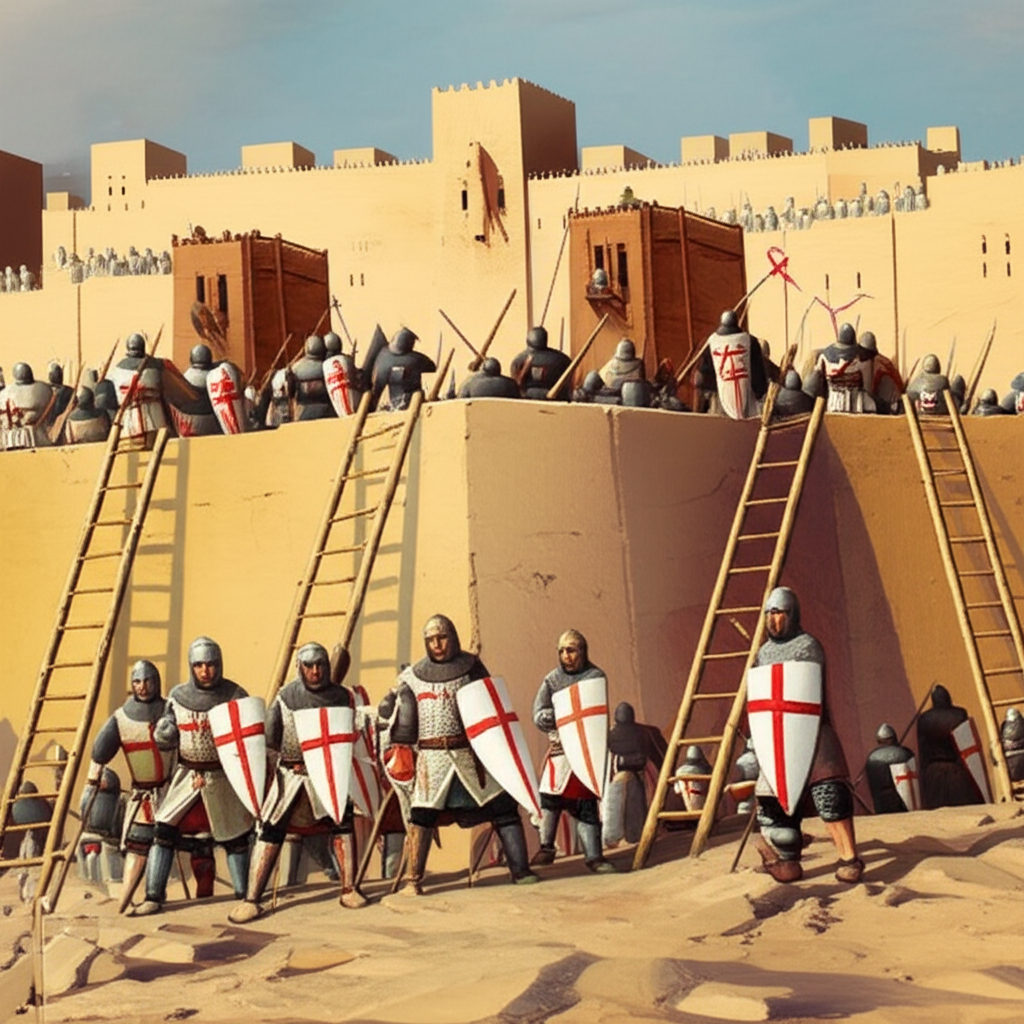
The First Crusade (1096-1099) was the most successful from a European perspective. After a grueling march across Anatolia and the Levant, the Crusaders besieged and captured Jerusalem in 1099. The siege was characterized by brutal close combat and the construction of siege towers under constant harassment from the defenders. The fall of Jerusalem sent shockwaves through the Islamic world and established the Crusader States along the eastern Mediterranean coast.
Hattin and the Fall of Jerusalem
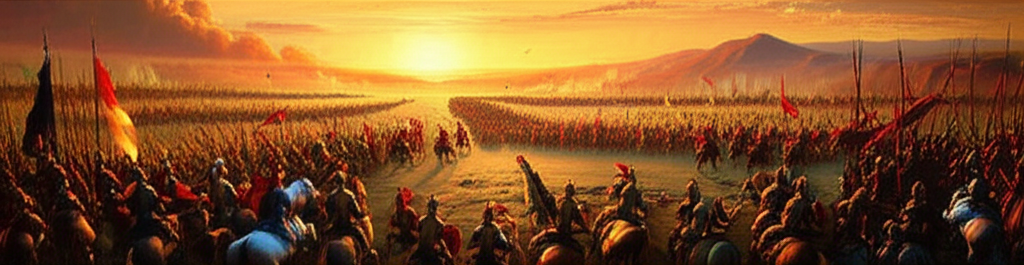
The Battle of Hattin in 1187 was one of the most decisive defeats suffered by the Crusaders. Saladin lured the Crusader army into a waterless desert near the Sea of Galilee, where heat and thirst destroyed their combat effectiveness before the battle even began. The resulting Muslim victory led to the recapture of Jerusalem and prompted the Third Crusade, which saw the legendary rivalry between Richard the Lionheart and Saladin. The Battle of Arsuf during the Third Crusade demonstrated that disciplined Crusader heavy cavalry could still defeat Muslim forces in open battle.
Hattin is studied today as a near-perfect example of strategic exhaustion. Saladin did not try to outfight the Crusaders — he spent days denying them water, setting grass fires to worsen the heat, and controlling the only accessible wells. By the time the two armies clashed at the Horns of Hattin, the Crusader infantry had effectively collapsed from thirst. The lesson — that logistics can defeat a superior force before any fighting occurs — would be repeated centuries later against Napoleon in Russia and the Germans in North Africa.
The Siege of Acre and the Later Crusades
The Siege of Acre (1189-1191) was one of the longest and most complex military operations of the Crusades, involving a double siege where Crusaders besieging the city were themselves besieged by a relief army. Later Crusades became increasingly political and commercially motivated, with the Fourth Crusade controversially sacking the Christian city of Constantinople in 1204. The fall of Acre) in 1291 ended the Crusader presence in the Holy Land.
Cultural and Economic Impact
The Crusades had lasting effects far beyond the military campaigns themselves. Contact between European and Islamic cultures led to significant exchanges of knowledge, technology, and trade goods.
- •European exposure to Islamic scholarship helped spark the Western Renaissance
- •Trade networks established during the Crusades enriched Italian city-states like Venice and Genoa
- •Arabic numerals, advanced medicine, and philosophical texts entered Europe through Crusader contacts
- •Military orders like the Knights Templar developed early forms of banking and international finance
- •The Crusades deepened divisions between Christianity and Islam that persist to this day
The Crusades in BattleGuess
Crusade-era battles are visually striking in BattleGuess, featuring knights in distinctive cross-marked surcoats, desert fortifications, and the colorful banners of both European and Islamic forces. Battles from this era appear in both the Medieval Europe and Ottoman & Islamic categories. Understanding the visual differences between Crusader and Islamic forces helps identify these battles quickly. Look for cross motifs on shields and surcoats for Crusader forces, and crescent symbols and lighter armor for Islamic armies.
The Crusades Outside the Holy Land
The word Crusade is often limited to campaigns in the Levant, but papal crusading authority was extended to many other theatres. These campaigns shaped Europe just as profoundly as the Eastern expeditions.
- •The Reconquista — centuries of Christian-Muslim warfare in Iberia, reframed as a crusade from the 12th century
- •The Northern Crusades — campaigns against pagan Baltic peoples that founded states like Prussia and Livonia
- •The Albigensian Crusade (1209-1229) — a brutal internal crusade against the Cathars of southern France
- •The Hussite Crusades (1419-1434) — multiple failed attempts to suppress Czech religious reformers who repeatedly defeated larger crusader armies
- •The late Ottoman crusades — including Nicopolis (1396) and Varna (1444), which tried and failed to halt Ottoman expansion into the Balkans
How Historians Revised the Crusades
For much of the 19th and 20th centuries the Crusades were told as either heroic Christian adventures or simple colonial land-grabs. Modern scholarship is more complicated. Historians now emphasise that Crusader states functioned as multi-ethnic societies where Franks, Syriac Christians, Muslims, and Jews coexisted under uneasy arrangements. The Muslim world’s own memory of the Crusades was surprisingly faint until the 19th century, when colonial encounters revived interest. And Byzantine perspectives — often of horror at what Western allies had done to them — complete a picture no single tradition captured alone.
Keep Exploring BattleGuess
The Crusades sit at the crossroads of siege warfare, Ottoman expansion, and medieval tactics. These related guides flesh out the surrounding story.
- •The Evolution of Siege Warfare — how Acre, Jerusalem, and Antioch fell or held
- •The Ottoman Empire’s Greatest Military Victories — the Islamic power that followed Saladin
- •The History of Cavalry: From Chariots to Tanks — heavy-lance charges that defined Crusader armies
- •The Greatest Military Commanders of All Time — Saladin and Richard the Lionheart in profile
- •Browse Crusader-era engagements in the Battle encyclopedia or try a medieval game mode round.